
Learning that you may be the subject of a police investigation can be overwhelming. You may have received a phone call from a detective, heard that officers have been asking questions about you, or even received a letter from prosecutors. If you are wondering what to do if you are under investigation in NJ, the steps you take early on can significantly affect the outcome of your case.
Many people assume that cooperating with investigators immediately will make the situation go away. In reality, speaking to law enforcement without legal guidance can expose you to serious risks. Whether you are facing a state matter or a federal investigation New Jersey authorities are conducting, understanding your rights is essential.
The best approach is to stay calm, avoid making statements, and seek legal advice as soon as possible.
How Do You Know If You Are Under Criminal Investigation in NJ?
There is not always a formal notice that you are under investigation in NJ. In many cases, people learn about an investigation indirectly.
Some signs that you may be involved in a criminal investigation New Jersey authorities are conducting include:
- Detectives contact you by phone or visit your home.
- Friends, family members, or coworkers are questioned about you.
- Law enforcement requests records, documents, or electronic information.
In some situations, investigators may execute a search warrant or request your consent to search your property. If police attempt to search your home or belongings, understanding whether police can conduct a search without a warrant in New Jersey is vital to protecting your constitutional rights.
Being contacted by police does not automatically mean you will be charged with a crime. At the same time, you should never assume that you are merely a witness. Many individuals who are eventually charged first learn they are being investigated for a crime NJ authorities are examining through informal contact from investigators.
The early stages of an investigation are often when the most significant mistakes occur. Seeking legal advice before speaking with police can help protect your rights and your future.
Do I Have to Talk to Police If I’m Under Investigation in New Jersey?
 One of the most common questions people ask is whether they are required to speak with police.
Generally, you do not have to answer investigative questions from law enforcement. Once you are in custody and have been advised of your Miranda rights, invoking your right to remain silent generally cannot be used as evidence of guilt. New Jersey law provides additional protection here — the state must prove any Miranda waiver was valid beyond a reasonable doubt, a higher standard than required under federal law. Staying silent during a voluntary, non-custodial encounter is a more complicated legal area, which is one reason consulting an attorney before speaking with investigators is so important.
Questions and concerns around talking to police for a New Jersey investigation often arise as officers may present the conversation as informal or routine. They may say they simply want to hear your side of the story or clear up a misunderstanding. Even so, anything you say can potentially be used against you later.
Many people also misunderstand Miranda rights. Miranda warnings generally apply during custodial interrogation. In other words, police usually must advise you of your rights when you are both in custody and being questioned. Officers do not have to provide Miranda warnings during every interaction or every investigative contact.
This distinction creates confusion. A person may voluntarily answer questions during an investigation and make statements that prosecutors later use as evidence, even if no Miranda warning was given.
Understanding your NJ police investigation rights means recognizing that you have the right to decline questioning and the right to consult with an attorney before making any statements. New Jersey’s privilege against self-incrimination, grounded in state common law and the rules of evidence, has in some respects offered broader protection than the federal Fifth Amendment, which is one more reason to involve an attorney early.
What Should I Do If the Police Ask Me to Come In for Questioning?
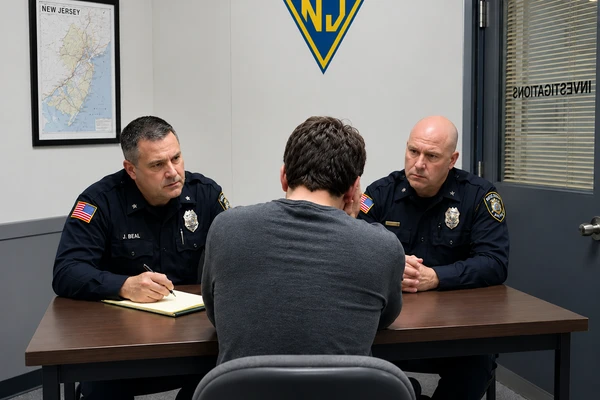
If investigators ask you to come to the station for questioning, take the request seriously.
Many people mistakenly believe that if they were truly suspected of wrongdoing, police would simply arrest them. In reality, investigators often seek interviews because they hope to obtain admissions, identify inconsistencies, or gather information that strengthens their case.
If police ask to speak with you:
- Remain calm.
- Avoid making statements or explanations.
- Contact an attorney before agreeing to an interview.
If you are being investigated for a crime NJ authorities are examining, speaking to police without legal representation can expose you to unnecessary risks. Even truthful statements can be misunderstood, taken out of context, or contradicted by other evidence.
An attorney can communicate with investigators on your behalf, determine the nature of the investigation, and help you decide whether participating in an interview serves your interests.
If investigators already have evidence against you, an attorney can help protect your rights and begin preparing a defense strategy. If the investigation has not yet developed into criminal charges, early legal intervention may help avoid mistakes that could otherwise lead to prosecution.
What Does It Mean to Receive a Target Letter in New Jersey?
 Receiving a target letter New Jersey prosecutors have issued can be alarming.
A target letter generally indicates that prosecutors believe there is substantial evidence linking you to criminal conduct and that you may be charged. This is often associated with a grand jury proceeding since most indictable offenses in New Jersey proceed through a grand jury that determines whether sufficient evidence exists to bring formal charges. Target letters are especially common in federal investigations, although state prosecutors may use similar notices in certain circumstances.
If you receive a target letter New Jersey authorities have sent, you should not ignore it and should not attempt to explain your position directly to investigators.
Federal investigations often involve agencies such as:
- The Federal Bureau of Investigation
- The Drug Enforcement Administration
- The Internal Revenue Service
A federal investigation New Jersey authorities are participating in can involve allegations of fraud, drug offenses, public corruption, financial crimes, or other serious offenses. Federal prosecutors typically devote substantial resources to building cases before charges are filed.
Because these investigations can move quickly, obtaining legal representation immediately is essential.
Do I Need a Lawyer If I’m Only a Witness, Not a Suspect?
Yes. Even if investigators describe you as a witness, consulting an attorney may still be advisable.
The status of an investigation can change rapidly. Someone initially considered a witness may later become a suspect if new information emerges. In some situations, investigators intentionally avoid disclosing the full nature of their inquiry.
People who are under investigation in NJ often believe that cooperation alone will protect them. Unfortunately, this assumption can create problems if investigators later interpret statements differently than expected.
An attorney can help you:
- Understand your legal exposure
- Prepare for interactions with investigators
- Avoid making statements that could be misconstrued
Having legal guidance does not mean you have done anything wrong. It means you are taking reasonable steps to protect your interests during a potentially serious matter.
Can I Leave New Jersey If I’m Under Investigation?
In many situations, you may be able to travel while an investigation is pending. Simply being under investigation in NJ does not automatically prohibit you from leaving the state.
However, every case is different.
Certain circumstances may affect your ability to travel, including:
- Existing bail conditions
- Court orders
- Restrictions imposed by a court in connection with federal criminal proceedings
Traveling while a criminal investigation New Jersey authorities are conducting is underway can also raise practical concerns. If investigators are attempting to contact you and cannot locate you, they may draw incorrect conclusions regarding your intentions.
Before making significant travel plans, it is often wise to consult an attorney who can evaluate the specific facts of your situation and advise you accordingly.
How the Law Office of Matthew V. Portella, LLC Can Help
Being contacted by law enforcement can create uncertainty and fear. Whether you are facing a local investigation, a complex state prosecution, or a federal investigation New Jersey authorities are pursuing, having experienced legal counsel can make a meaningful difference.
The Law Office of Matthew V. Portella, LLC has represented individuals facing criminal allegations and investigations throughout New Jersey since 1995, bringing over three decades of experience to every case.
Through strategic representation, Attorney Portella can communicate with investigators, evaluate evidence, advise you regarding questioning, and help you avoid mistakes that may affect the outcome of your case.
If you believe you are being investigated for a crime NJ authorities may be pursuing, it is often beneficial to seek legal guidance before charges are filed, particularly given the wide range of criminal defense matters the firm regularly handles.
If you have questions about what to do if you are under investigation in NJ, contact the Law Office of Matthew V. Portella, LLC today.
Law Office of Matthew V. Portella, LLC
25 Chestnut Street, Suite 2
Haddonfield, NJ 08033
Phone: (856) 310-9800
Schedule a consultation today to discuss your case and learn how an experienced New Jersey criminal defense attorney can help protect your rights and your future.